
Fez Morocco Medina Guide: What to See, Do and Know
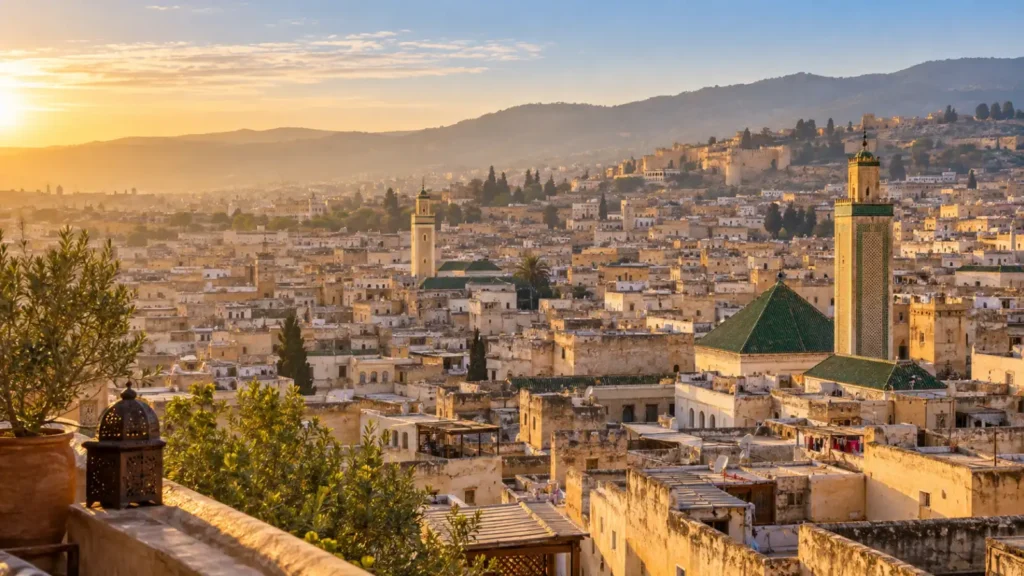
The Fez Morocco medina is not a place to rush through with a checklist. Fes el-Bali is a living historic city of narrow lanes, neighbourhood markets, workshops, madrasas, mosques and family homes. The most rewarding visit combines its famous monuments with time to understand the crafts, food and daily life that continue around them.
This practical guide explains what to see in Fez, how long to stay, when a local guide is useful and how to connect the city with the rest of your Morocco itinerary. You will see both spellings—Fez and Fes—in maps and travel information; they refer to the same city.
Table of Contents
Table of Contents
Why Visit Fez?
Fez is one of Morocco’s imperial cities and one of the country’s strongest destinations for travelers interested in history, architecture, craftsmanship and food. Marrakech often feels theatrical and energetic; Fez can feel more inward-looking and traditional. Its historic core rewards curiosity: a plain doorway may open into a tiled courtyard, and a quiet lane may lead to a busy artisan workshop.
The medina is not an open-air museum. People live, study, worship, shop and work here. Approaching it respectfully makes the visit more meaningful and helps you see beyond the most photographed stops.
Fes el-Bali, Fes el-Jdid and the New City
Fez is larger than its oldest medina. Understanding its three main areas makes planning easier:
- Fes el-Bali: the oldest walled part of the city and the area most visitors mean when they say “the Fez medina.” Its lanes contain the tanneries, traditional souks, historic madrasas and many workshops.
- Fes el-Jdid: the later royal district, associated with the Royal Palace gates, the Mellah and broader streets than much of Fes el-Bali.
- Ville Nouvelle: the modern city, with wide avenues, restaurants, cafés, shops and transport connections.
If you have only one day, concentrate on Fes el-Bali. With two days, you can explore the old medina at a calmer pace and add Fes el-Jdid, the Mellah, gardens or a panoramic viewpoint.
What to See in the Fez Morocco Medina
Bab Bou Jeloud
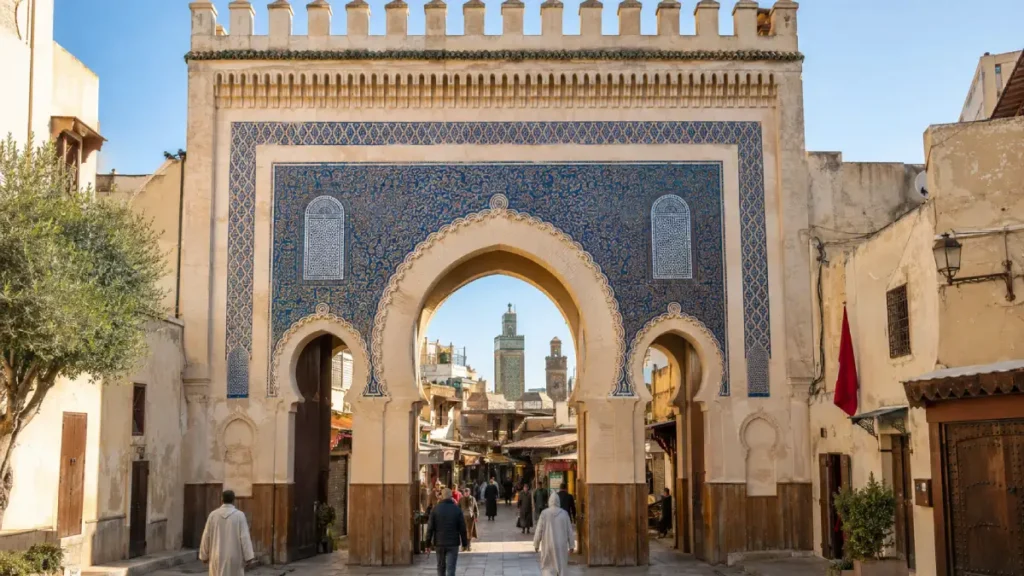
Bab Bou Jeloud, often called the Blue Gate, is a well-known entrance to Fes el-Bali and a practical meeting point. Passing through it brings you close to the medina’s two main commercial lanes. It is a good place to begin understanding the relationship between gates, neighbourhoods and traditional markets.
Bou Inania Madrasa
Bou Inania Madrasa is one of the city’s finest examples of Marinid architecture. Carved cedar, geometric zellige and detailed plasterwork show how decoration, learning and religious life were brought together. Access conditions can change, so your daily route should remain flexible.
Al Quaraouiyine Area
The Al Quaraouiyine mosque and learning complex is central to the intellectual and spiritual history of Fez. Non-Muslim visitors should not expect general access to the mosque interior, but the surrounding lanes, gateways and exterior views still provide important context. A guide can explain what you are seeing while respecting worshippers and access rules.
Chouara Tanneries
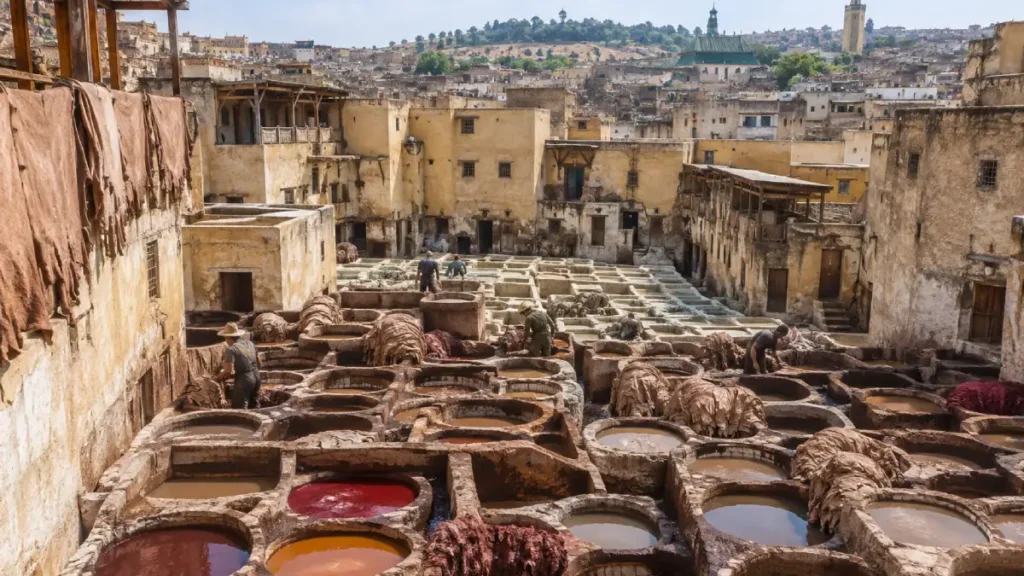
Chouara is the best-known tannery area in Fez. Terraces above surrounding leather shops provide views over the dyeing vats and workspaces. The experience can involve strong smells, stairs and a commercial setting, so there is no obligation to buy. Ask before photographing people closely and allow your guide to explain the traditional process without disrupting the workers.
Nejjarine and the Artisan Quarters
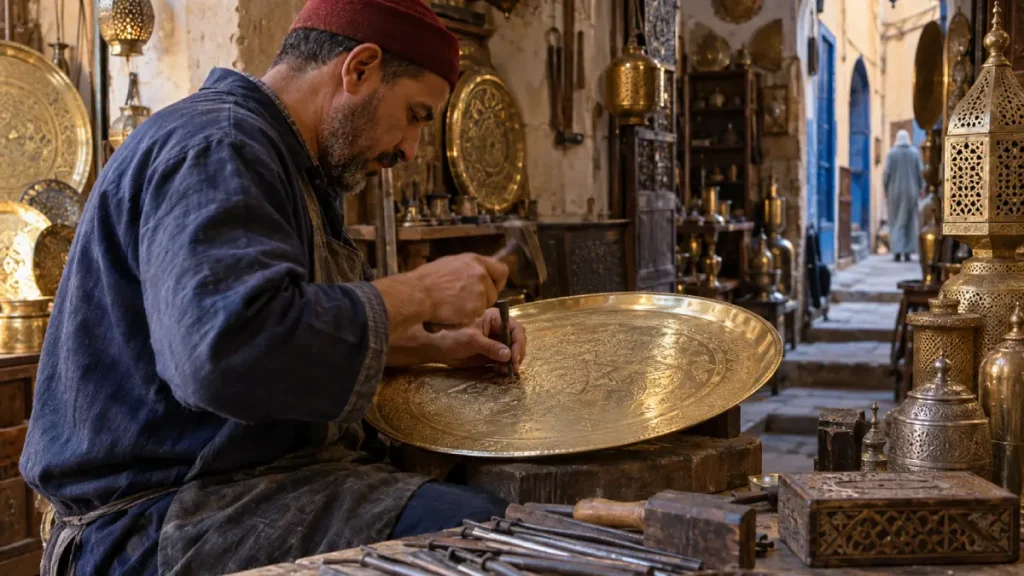
The Nejjarine area and nearby workshops reveal the medina through its crafts. Depending on the route and what is open, you may encounter woodcarvers, brass workers, weavers, leatherworkers, potters or embroidery sellers. Workshops are working spaces rather than performances, so the most interesting visits are often brief, respectful and conversational.
The Souks and Food Markets
Fez is known for more than monuments. Produce stalls, spice shops, bakeries and small food counters show how the medina functions every day. Look for Moroccan breads, olives, seasonal fruit, harira, grilled meats and local sweets. If you have allergies or dietary restrictions, explain them clearly before accepting a tasting.
Do You Need a Guide in Fez?
You can explore Fez independently, but a licensed local guide is especially useful on your first day. The value is not simply avoiding wrong turns. A good guide connects monuments with neighbourhood history, explains craft traditions, helps you understand etiquette and designs a route around your available time and interests.
A private tour should not feel like a compulsory shopping trip. Tell your guide whether you want history, architecture, food, crafts, photography or a balanced introduction. If you do not want shop visits, say so at the beginning. If you are interested in buying, ask for explanations of quality, materials and bargaining before making a decision.
How Many Days Do You Need in Fez?
One Day in Fez
One full day is enough for a focused introduction to Fes el-Bali. Start near Bab Bou Jeloud, visit one or two major historic sites, continue through artisan and food quarters, see the tannery area and allow time for lunch. Avoid trying to include every landmark; the distances may look small on a map, but crowds, stairs and stops slow the pace.
Two Days in Fez
Two days provide a better balance. Use the first for a guided medina tour and the second for independent exploration, shopping, a food experience, Fes el-Jdid, the Mellah, Jnan Sbil Gardens or panoramic views. You will have more freedom to pause rather than treating the medina as a race.
Three or More Days
A longer stay suits travelers who enjoy crafts, photography and slow travel. It also creates room for an excursion toward Meknes and the archaeological site of Volubilis, or for Fez to become part of a wider private Morocco itinerary.
Where to Stay in Fez
Staying inside the medina offers atmosphere and puts you near many historic sites, but not every riad is easy to reach with luggage. Ask the property about the nearest vehicle-accessible point, porter arrangements, stairs, heating or air-conditioning and late arrival procedures. Travelers who prioritise simple vehicle access, larger modern hotels or train connections may prefer the new city.
Do not choose accommodation only from a beautiful rooftop photograph. Location, access and service matter more when you arrive after dark or travel with children, mobility limitations or heavy luggage.
Practical Tips for Visiting Fez
- Wear supportive shoes: medina lanes include uneven surfaces, slopes and steps.
- Dress respectfully: light, modest clothing works well in the city and near religious sites.
- Carry small cash: useful for simple purchases, but keep money secure and do not display large amounts.
- Ask before photographing: workshops and residential streets are part of people’s daily lives.
- Confirm meeting points carefully: choose a named gate, square or hotel entrance rather than an unclear pin inside the medina.
- Expect limited vehicle access: much of Fes el-Bali is explored on foot.
- Keep plans flexible: religious observances, restoration work and local opening conditions may change what is accessible.
How to Include Fez in a Morocco Itinerary
Fez works well with Casablanca and Rabat to the west, Chefchaouen to the north and the Middle Atlas and Sahara routes to the south-east. The best order depends on your arrival airport, departure airport, trip length and tolerance for long driving days.
If you begin in Casablanca, explore our private tours from Casablanca and ask for a route that includes Fez without unnecessary backtracking. Travelers starting in Marrakech can reach Fez through the Atlas Mountains and desert on our 3-day Marrakech to Fez desert tour.
For a route built around your own dates, interests and hotel style, see our custom Morocco tours. We can suggest where Fez fits, how many nights are realistic and which travel days should be shortened.
Plan a Private Fez Tour With Morkosh Tours
I’m Youness, a licensed Moroccan guide and owner of Morkosh Tours since 2004. I help couples, families and small private groups plan Morocco trips that match their pace rather than forcing them into a large bus itinerary.
Send your travel dates, arrival city, departure city, group size and the places you most want to see. We will suggest a realistic route and explain how to include Fez, whether you need a guided medina day or a complete private Morocco tour.
Frequently Asked Questions About Fez
Are Fez and Fes the same place?
Yes. Both spellings refer to the same Moroccan city. “Fez” is common in English travel searches, while “Fes” appears frequently on maps, transport information and local signs.
Is the Fez medina difficult to navigate?
First-time visitors often find it confusing because lanes branch, change level and pass through covered markets. A guide is helpful for a structured first visit. If exploring alone, use clear gates and major landmarks as reference points rather than relying only on a phone map.
Can non-Muslims enter mosques in Fez?
General tourist access to active mosques is restricted. Visitors can appreciate exterior architecture and may visit historic madrasas or other cultural sites when open. Always follow signs and local guidance.
Is Fez suitable for families?
Yes, especially with a shorter route, engaging craft stops and regular breaks. Families with strollers should expect uneven lanes, steps and crowded sections. Share children’s ages and mobility needs before arranging a private tour.
What should I buy in Fez?
Fez is known for leatherwork, ceramics, metalwork, textiles and carved wood. Buy only when an item and price feel right to you. Ask how and where something was made, compare quality and remember that you are never required to purchase during a guided visit.