Morocco National Dish: Couscous and Other Traditional Foods
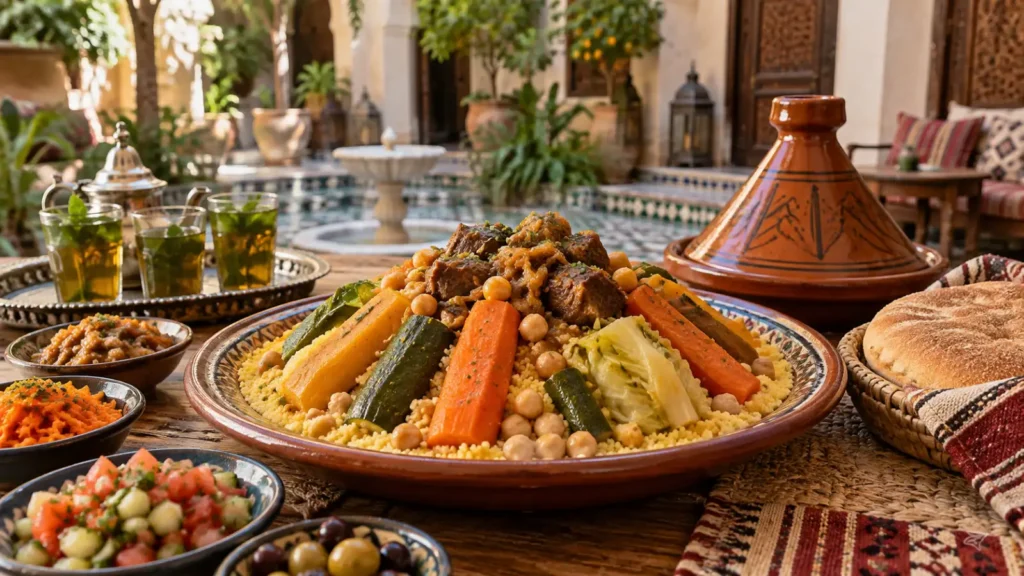
The Morocco national dish most widely recognized is couscous. This traditional meal of steamed semolina grains is usually served with vegetables, chickpeas, and meat or chicken, although recipes vary between families and regions. In many Moroccan homes, couscous is especially associated with Friday lunch, when relatives gather around one shared dish after midday prayers.
Tagine may be the Moroccan food international visitors recognize most easily, but couscous carries deeper meaning as a communal family meal. It represents hospitality, patience, inherited cooking skills, and the pleasure of eating together. UNESCO added the knowledge and traditions surrounding couscous to the Representative List of the Intangible Cultural Heritage of Humanity in 2020 through a joint nomination by Morocco, Algeria, Mauritania, and Tunisia.
This guide explains why couscous is considered the national food of Morocco, how it differs from tagine, which other dishes travelers should try, and how to experience Moroccan cuisine during a visit.
Table of Contents
Table of Contents
Why Is Couscous Morocco’s National Dish?
Couscous is eaten throughout Morocco and adapts easily to local ingredients, seasons, and family traditions. The small grains are made from semolina and traditionally rolled and steamed several times until they become light and tender. They are then arranged beneath a flavorful broth with vegetables and, depending on the recipe, lamb, beef, chicken, or no meat at all.
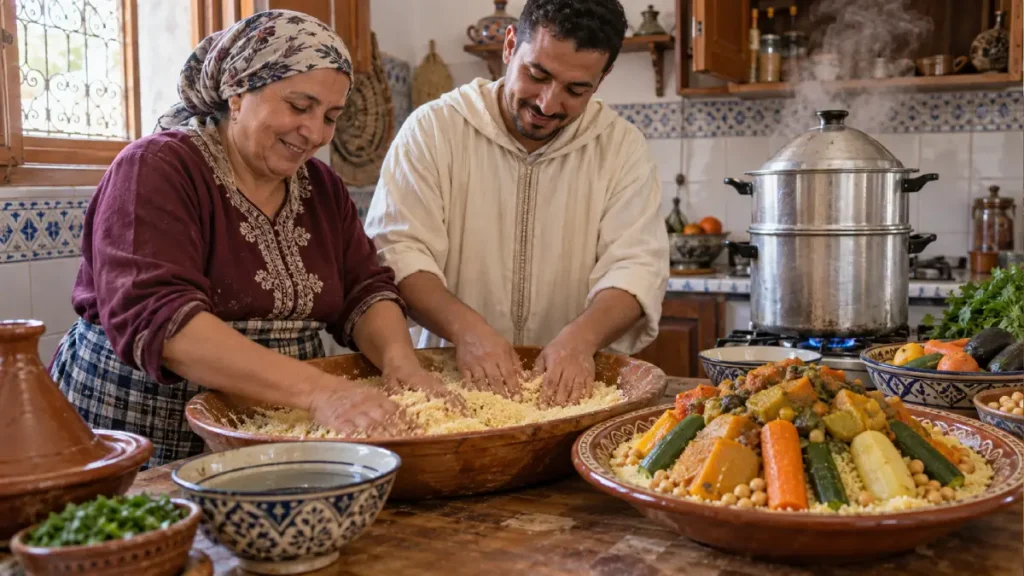
The dish is important for more than its ingredients. Preparing it takes time and is often a shared household activity. The finished couscous is placed in the center of the table so everyone can eat together. That sense of sharing is one reason the UNESCO description of couscous traditions emphasizes solidarity, hospitality, and togetherness.
Friday Couscous in Morocco
Friday is the traditional day for couscous in many Moroccan families. Lunch is commonly served after Friday prayers, and the meal can bring several generations together. Visitors may see couscous on restaurant menus every day, but a home-cooked Friday version provides a better understanding of its cultural role.
Seven-Vegetable Couscous
Couscous with seven vegetables is one of the best-known versions. The exact vegetables change according to season and household, but they may include carrots, courgettes, turnips, pumpkin, cabbage, tomatoes, and chickpeas. The number seven has positive cultural associations, although cooks do not always count the vegetables strictly.
Other variations include sweet-and-savory couscous with caramelized onions and raisins, regional seafood versions, and simple vegetarian preparations. There is no single recipe that represents every Moroccan table.
Is Tagine the National Food of Morocco?
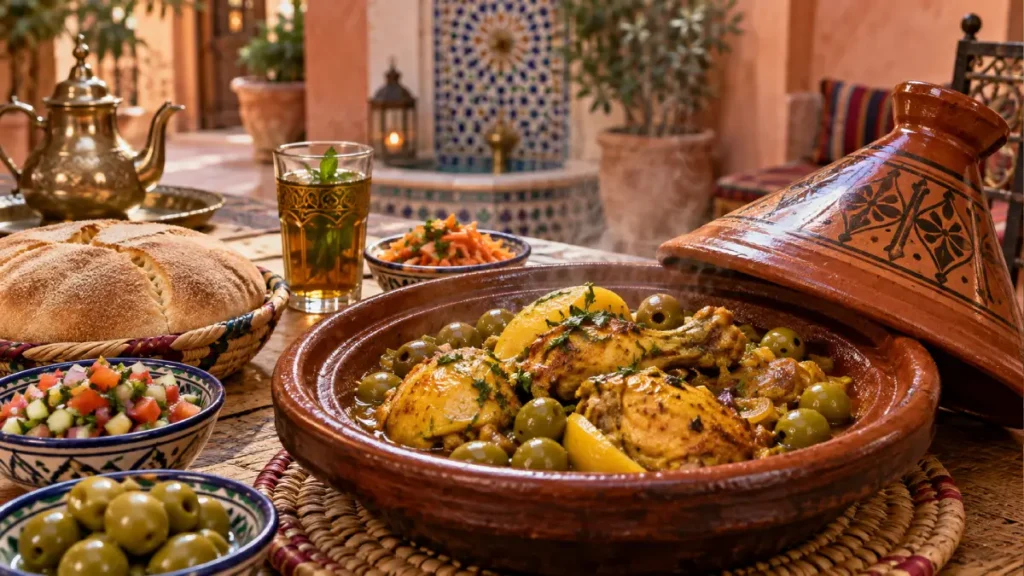
Tagine is an iconic Moroccan dish, but couscous is more often described as Morocco’s national dish. The word tagine refers both to the cone-shaped earthenware cooking vessel and to the slow-cooked meal prepared inside it.
Tagines vary enormously. Chicken with preserved lemon and olives is bright and savory. Lamb or beef with prunes combines meat, warm spices, fruit, sesame, and almonds. Kefta tagine uses seasoned meatballs in tomato sauce, often finished with eggs. Vegetable tagines can feature seasonal produce, olive oil, herbs, and spices.
Rather than asking whether couscous or tagine is the “real” Moroccan national food, it is useful to understand their different roles. Couscous is strongly connected with communal weekly meals and celebrations, while tagine is a broad cooking tradition enjoyed in homes and restaurants across the country.
Other Traditional Moroccan Foods to Try
The Moroccan National Tourist Office’s gastronomy guide highlights the variety of the country’s food traditions, including couscous, tagine, pastilla, rfissa, and mechoui. These dishes reflect Amazigh, Arab-Andalusian, Jewish, Mediterranean, Saharan, and regional influences.
Pastilla
Pastilla is a delicate sweet-and-savory pie with thin pastry layers. Traditional versions may contain pigeon, while chicken and seafood versions are also common. Almonds, cinnamon, sugar, herbs, and warm spices create the contrast that makes the dish memorable.
Harira
Harira is a tomato-based soup commonly prepared with lentils, chickpeas, herbs, and sometimes meat. It is served throughout the year but has a special place during Ramadan, when many families eat it as they break the daily fast.
Rfissa
Rfissa combines shredded msemen or trid bread with lentils, chicken, onions, and a fragrant broth. Fenugreek and ras el hanout often give it a distinctive aroma. It is a comforting communal dish connected with family occasions and hospitality.
Tanjia Marrakchia
Tanjia is closely associated with Marrakech. Meat, preserved lemon, garlic, cumin, saffron, and smen are sealed inside an earthenware jar and traditionally cooked slowly in the ashes of a public hammam furnace. Do not confuse tanjia, the Marrakech specialty, with tagine.
Moroccan Bread
Bread is central to Moroccan meals and is often used to pick up food from a shared plate. Khobz is the familiar round loaf, while msemen is a layered flatbread and baghrir is a soft pancake known for the tiny holes across its surface. Fresh bread makes even a simple breakfast of olive oil, honey, cheese, and mint tea feel complete.
Moroccan Spices and Flavors
Moroccan cooking is aromatic, but it is not automatically hot or dominated by chili. Cumin, ginger, turmeric, cinnamon, paprika, black pepper, saffron, coriander, and parsley are widely used. Preserved lemons, olives, dried fruit, orange-flower water, honey, almonds, argan oil, and good olive oil also create important layers of flavor.
Ras el hanout means “top of the shop” and describes a spice blend selected by a merchant or household. Its recipe is not fixed, so flavor and quality differ from one seller to another. Buying spices in a souk can be enjoyable, but travelers should choose reputable shops and remember that the brightest display is not always the best product.
Moroccan Sweets and Drinks
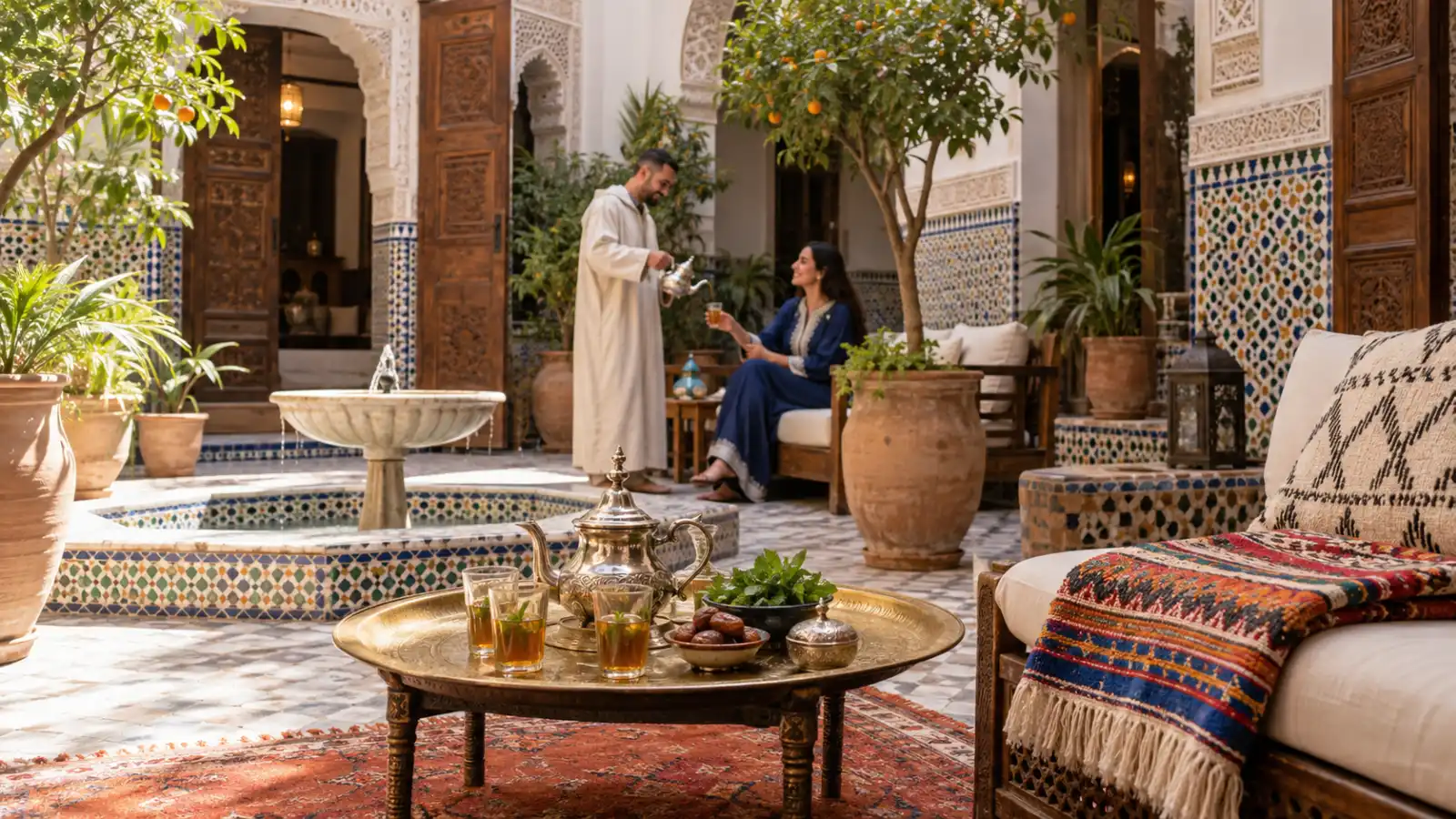
Mint tea is Morocco’s best-known drink and an everyday expression of welcome. It is commonly prepared with green tea, fresh mint, and sugar, although sweetness varies. Coffee, fresh orange juice, almond drinks, and seasonal fruit juices are also widely available.
Popular sweets include chebakia coated with honey and sesame, almond-filled kaab el ghazal, ghriba biscuits, briouats, and sfenj doughnuts. During Ramadan and religious celebrations, particular pastries may appear more frequently in homes, bakeries, and markets.
Where Can Travelers Experience Authentic Moroccan Food?
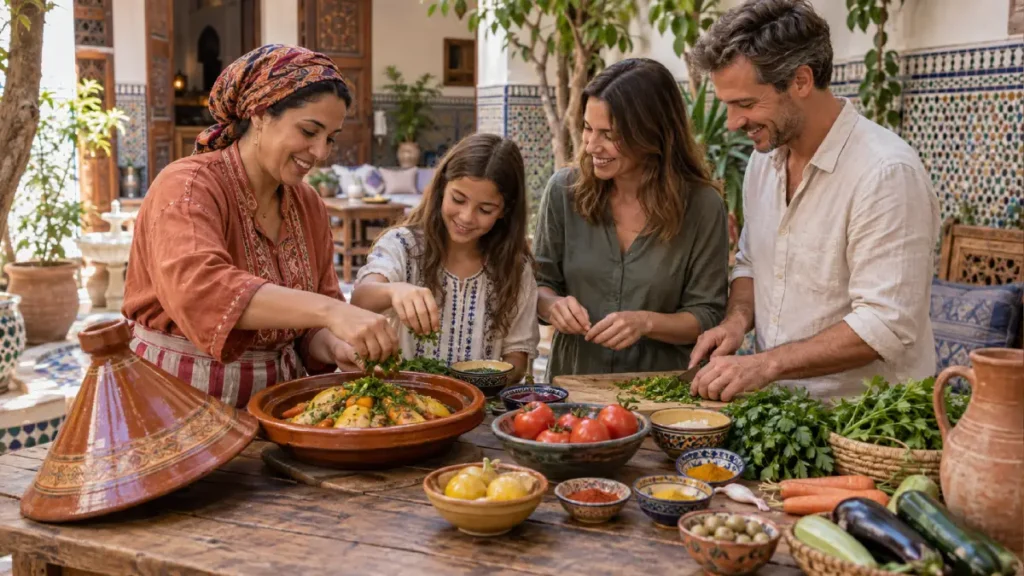
Excellent Moroccan food is not limited to luxury restaurants. Family kitchens, neighborhood bakeries, market stalls, riads, small local restaurants, and regional roadside stops can all provide meaningful experiences. The most memorable meal is often the one accompanied by an explanation of the ingredients, preparation, and family tradition.
In Marrakech, travelers can join a family-friendly Moroccan cooking class with a market visit, hands-on preparation, and a home-style lunch. This is the strongest choice if you want to learn how ingredients become a finished tagine or couscous rather than only tasting the result.
If you prefer to sample several foods while exploring the medina, consider a private Marrakech food tour. A local guide can introduce breads, olives, spices, seasonal snacks, sweets, tea culture, and dishes you might otherwise overlook.
Moroccan Dining Etiquette for Visitors
- Wash your hands before and after a shared meal.
- Wait for your host or guide to show you where to sit and when to begin.
- If eating from one shared plate, take food from the section directly in front of you.
- Bread is often used instead of cutlery, although restaurants readily provide forks and spoons.
- Accepting at least a small glass of tea is a friendly gesture when visiting a home.
- Tell your host clearly about allergies or dietary restrictions before cooking begins.
Can Vegetarian Travelers Enjoy Moroccan Cuisine?
Yes, but it is important to explain your requirements clearly. Vegetable tagines, salads, lentils, beans, soups, breads, olives, fruit, and couscous can all suit vegetarian travelers. However, a vegetable dish may still be prepared with meat broth or cooked alongside meat, so ask rather than assuming.
A private cooking experience is useful for allergies and dietary preferences because ingredients can be discussed in advance. Send details when booking, especially for gluten, nut, sesame, egg, or dairy allergies.
Plan a Food Experience in Marrakech
Food can be added naturally to a wider Marrakech itinerary. Browse our Marrakech activities and excursions to combine a cooking class or food tour with historical walks, shopping, gardens, the Atlas Mountains, or an evening in Agafay.
If Moroccan cuisine is a major reason for your trip, Morkosh Tours can also include markets, regional dishes, family meals, and cooking experiences in a custom Morocco tour. The route can be adapted to Marrakech, Fes, Essaouira, the Atlas Mountains, the desert, and other regions with distinct food traditions.
Want to taste or prepare Morocco’s national food? Contact Morkosh Tours with your dates, group size, dietary requirements, and preferred experience. We will recommend a realistic cooking class, food tour, or private Morocco itinerary.
Frequently Asked Questions
What is the national dish of Morocco?
Couscous is widely considered Morocco’s national dish. It is made from steamed semolina grains and commonly served with vegetables, chickpeas, broth, and meat or chicken.
Is couscous Moroccan or Algerian?
Couscous belongs to a wider North African cultural tradition rather than one modern country alone. UNESCO recognized its production and consumption traditions through a joint nomination by Algeria, Mauritania, Morocco, and Tunisia.
What is Morocco’s most famous food?
Couscous and tagine are the two most internationally recognized Moroccan foods. Couscous is commonly described as the national dish, while tagine includes many slow-cooked recipes prepared in the distinctive earthenware vessel.
What food should I try first in Morocco?
Start with couscous, chicken tagine with preserved lemon and olives, seasonal Moroccan salads, harira, fresh bread, mint tea, and a local pastry. Add regional specialties depending on where you travel.
Is Moroccan food spicy?
Moroccan food is usually aromatic rather than extremely hot. It uses layered spices, herbs, preserved lemon, olives, dried fruit, and other ingredients to create depth without relying only on chili heat.