History of Marrakech Medina: Souks, Palaces and Dynasties
The history of Marrakech Medina begins in the 11th century, when the Almoravids established a new capital near the High Atlas Mountains. Over the centuries, dynasties expanded the city with mosques, palaces, gardens, schools, markets, and defensive walls. Today, the Medina is not simply a collection of monuments: it remains a living neighborhood where people work, worship, shop, cook, and raise families.
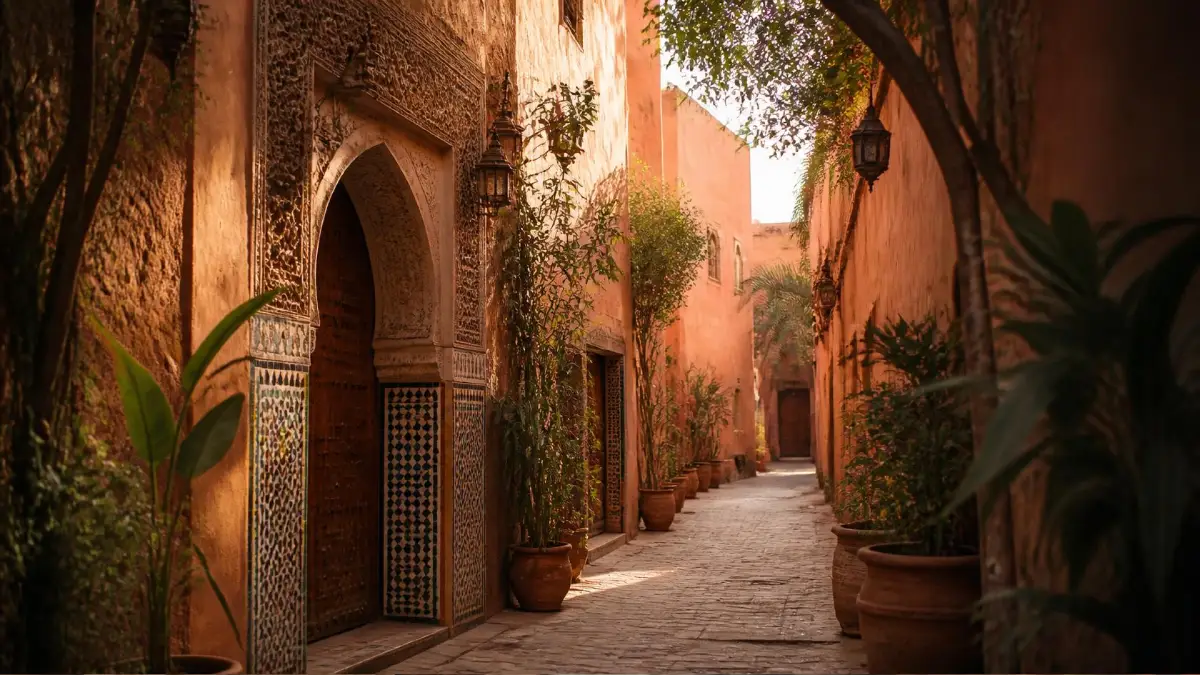
Its narrow lanes can feel confusing on a first visit, but their details tell a remarkable story. A carved doorway may lead to a quiet riad, a crowded souk may follow an old trade route, and a ruined palace may reveal the ambitions of a former sultan. This guide explains how Marrakech developed and which historic places help visitors understand it.
Table of Contents
Table of Contents
When Was Marrakech Medina Founded?
Marrakech was founded around 1070–1072 by the Almoravids, an Amazigh dynasty that built an empire linking the Sahara, Morocco, and al-Andalus. The location offered access to water, trade routes, fertile plains, and the mountain passes leading south. The new city became a political and commercial center.
One of the rare surviving Almoravid monuments is the Almoravid Koubba near Ben Youssef. Its carved decoration, arches, and inscriptions provide a glimpse of the sophisticated architecture that existed before later dynasties transformed the city.
The Almohads and the Koutoubia Mosque
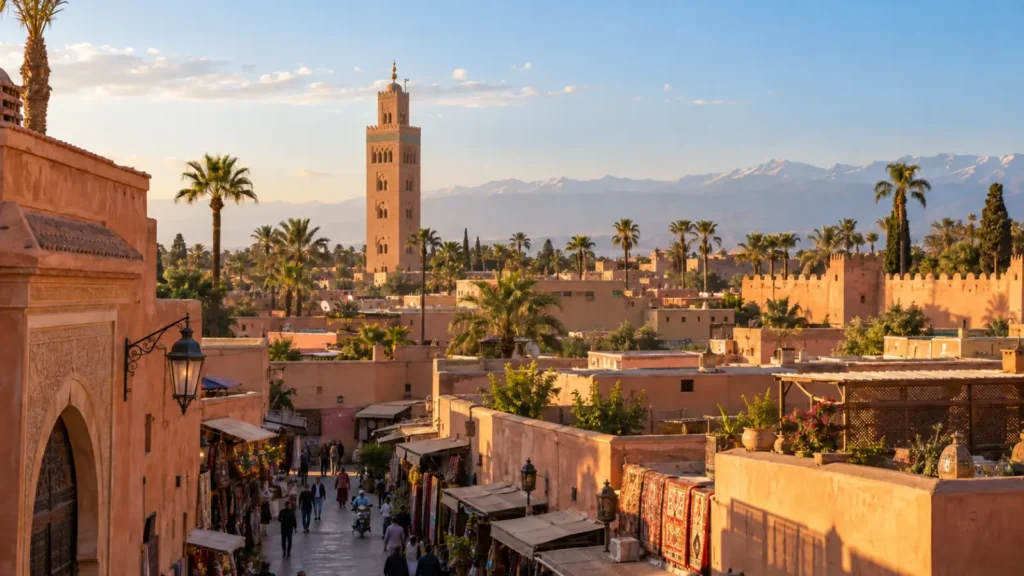
The Almohads took Marrakech in the 12th century and made it the capital of a powerful empire extending across North Africa and into Iberia. They reshaped the city and built monuments that still define its skyline. The most famous is the Koutoubia Mosque, whose minaret became a model for towers in Rabat and Seville.
The mosque stands just outside the busiest part of the old city and is an excellent orientation point. Non-Muslims cannot enter, but visitors can walk around its gardens and study the stonework and proportions from outside. The Almohads also strengthened the kasbah and defensive system, helping establish the outline of the Medina seen today.
Marrakech Under the Saadian Dynasty
Marrakech regained political importance under the Saadians during the 16th century. Wealth from trade and military expansion funded ambitious construction. The Saadian Tombs, decorated with carved cedar, marble, plasterwork, and zellige, preserve the dynasty’s most refined surviving art.
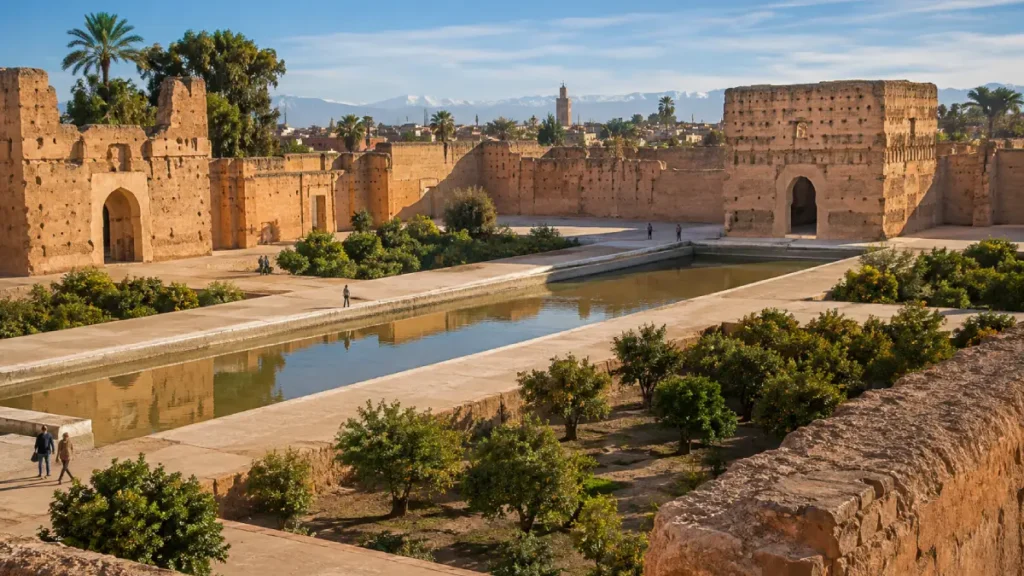
Nearby, El Badi Palace was designed as an enormous ceremonial complex. Much of its decoration was later removed, but the surviving courtyards, sunken gardens, walls, and pavilions still communicate its scale. Walking through the ruins helps visitors imagine Marrakech as an imperial capital receiving diplomats, merchants, and royal guests.
The Alaouite Era and Bahia Palace
Under the Alaouite dynasty, Marrakech continued to evolve as a royal, religious, and trading city. Bahia Palace, largely developed in the late 19th century, illustrates elite domestic architecture rather than medieval fortification. Its courtyards, painted wooden ceilings, carved plaster, gardens, and tiled rooms were arranged around privacy and changing levels of access.
The palace is useful for understanding why traditional Moroccan houses often appear plain from the street but richly decorated inside. Architecture turns inward, protecting family life from noise and heat while creating calm around central courtyards.
Why Marrakech Medina Is a UNESCO World Heritage Site
The Medina of Marrakesh was inscribed by UNESCO in 1985. UNESCO recognizes both its major monuments and its historic urban fabric. The Koutoubia Mosque, ramparts, monumental gates, kasbah, gardens, Ben Youssef Madrasa, Saadian Tombs, El Badi Palace, traditional residences, and Jemaa el-Fna all contribute to its significance.
This designation does not mean the Medina is frozen in the past. It is a living city under pressure from tourism, traffic, development, changing property use, and the need to preserve traditional materials and skills. Responsible tourism supports local guides, artisans, family businesses, and careful restoration.
Jemaa el-Fna: The Medina’s Public Stage
Jemaa el-Fna has long connected the royal city, markets, neighborhoods, and roads leading beyond Marrakech. Its character changes through the day. Morning brings juice sellers, shoppers, and people crossing the square; evening brings food stalls, musicians, storytellers, and dense crowds.
The square is exciting, but it is also a working environment. Ask before taking close photographs, agree on prices for services in advance, and keep valuables secure. The best way to appreciate Jemaa el-Fna is to observe how it links entertainment, trade, food, and social life rather than treating it as a staged attraction.
How the Marrakech Souks Developed
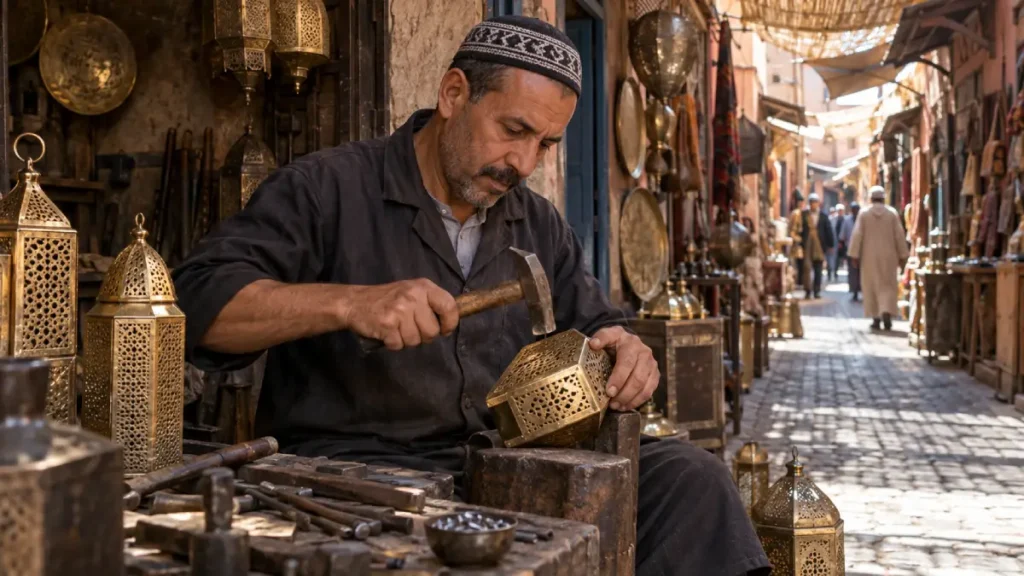
The souks grew around routes connecting the main square, mosques, workshops, caravan trade, and residential quarters. Trades were traditionally grouped by specialty. Leather workers, metalworkers, dyers, woodcarvers, slipper makers, spice sellers, and textile merchants occupied different areas, making production and trade easier to organize.
These boundaries are less rigid today, yet visitors can still find working sections devoted to lamps, leather, carpets, jewelry, clothing, spices, and household goods. Behind the retail displays, some artisans continue to cut wood, hammer metal, stitch leather, and assemble decorative objects by hand.
Ben Youssef: Scholarship and Sacred Architecture
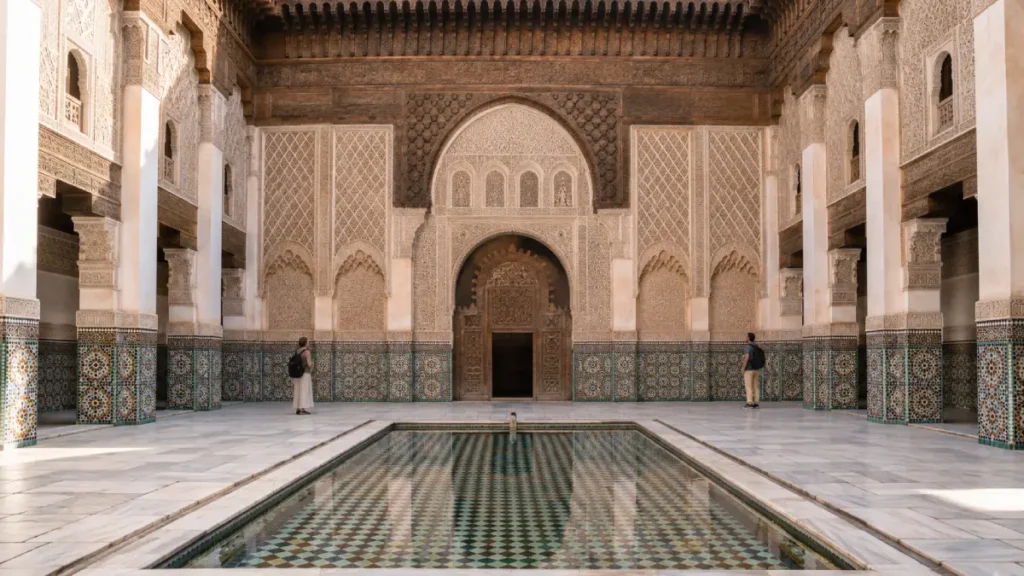
The Ben Youssef area was historically associated with religion, education, and scholarship. The Ben Youssef Madrasa served students studying Islamic subjects and other fields. Its central courtyard and student rooms show the contrast between elaborate shared ceremonial spaces and simple private accommodation.
Close by, the Almoravid Koubba links the neighborhood to the city’s earliest dynasty. Visiting both sites creates a useful timeline: the Koubba preserves rare 12th-century Almoravid work, while the madrasa reflects later architectural development and the city’s long intellectual life.
Riads, Fondouks, and Traditional Neighborhoods
The Medina’s history is also found in ordinary building types. Riads and dars organize rooms around internal courtyards. Fondouks provided accommodation, storage, and trading space for merchants and animals arriving with goods. Public fountains, neighborhood ovens, hammams, mosques, and small shops supported daily community life.
Many buildings have been adapted into guesthouses, restaurants, galleries, or shops. Sensitive restoration can preserve craftsmanship and structure, while careless renovation can erase the character that makes the Medina valuable. Look beyond decorated façades and notice how shade, water, airflow, privacy, and shared services shaped the old city.
A Practical Historical Walking Route
A first-time visitor can connect the Medina’s main historical periods on a well-planned walk:
- Begin at the Koutoubia Mosque and gardens for Almohad history.
- Cross Jemaa el-Fna and enter the central souks.
- Continue to the Ben Youssef Madrasa and Almoravid Koubba.
- Walk south through residential and market lanes toward the Mellah.
- Visit Bahia Palace for late 19th-century architecture.
- Continue to El Badi Palace and the Saadian Tombs in the kasbah.
This route covers a large area and opening hours can change. Trying to follow a map while navigating crowded alleys often means missing the stories behind what you see. Our Marrakech Medina walking tour connects the monuments with the neighborhoods, crafts, and daily life between them.
Do You Need a Guide in Marrakech Medina?
You can explore central Marrakech independently, but a licensed guide adds historical context, helps organize a realistic route, and reduces time lost in complicated lanes. A good tour should not feel like a shopping trip. It should explain the city’s dynasties, architecture, religious traditions, artisan work, and modern challenges.
Compare our Marrakech walking tours if you want a private historical, cultural, food, or shopping-focused experience. Travelers with extra time can also explore our Marrakech activities and excursions before or after the Medina.
Tips for Visiting the Historic Medina
- Start early for cooler temperatures and quieter monuments.
- Wear comfortable shoes suitable for uneven paving.
- Carry small amounts of cash for tickets and local purchases.
- Ask before photographing people or working artisans.
- Use major landmarks—not only phone navigation—to stay oriented.
- Agree on prices before accepting a service.
- Allow more time than the map suggests because the lanes are busy.
For additional planning ideas, see our guides to hidden gems in Marrakech and the best things to do in Marrakech.
Explore Marrakech With a Local Guide
I’m Youness, a licensed Moroccan guide and owner of Morkosh Tours. I have been guiding visitors since 2004, helping couples, families, and small groups understand Marrakech beyond its busiest streets. Tell me how much time you have and what interests you most, and I will suggest a private route at a comfortable pace.
Frequently Asked Questions
How old is Marrakech Medina?
Marrakech was founded around 1070–1072 by the Almoravids, making the historic city more than nine centuries old.
Why is Marrakech Medina historically important?
It served as an imperial capital and a major political, economic, religious, and cultural center connecting North Africa, the Sahara, and al-Andalus.
What are the most important historic sites?
Key sites include the Koutoubia Mosque, Almoravid Koubba, Ben Youssef Madrasa, Saadian Tombs, El Badi Palace, Bahia Palace, the kasbah, city walls, souks, and Jemaa el-Fna.
How long should I allow for the Medina?
Allow at least half a day for a focused historical walk. A full day provides more time for monuments, artisan areas, lunch, and quieter residential lanes.
Is Marrakech Medina safe to explore?
The main visitor areas are generally busy and welcoming. Use normal city precautions, keep valuables secure, avoid poorly lit empty lanes late at night, and ask your accommodation or licensed guide for route advice.